Space Exploration Center Joins European Space Education Network
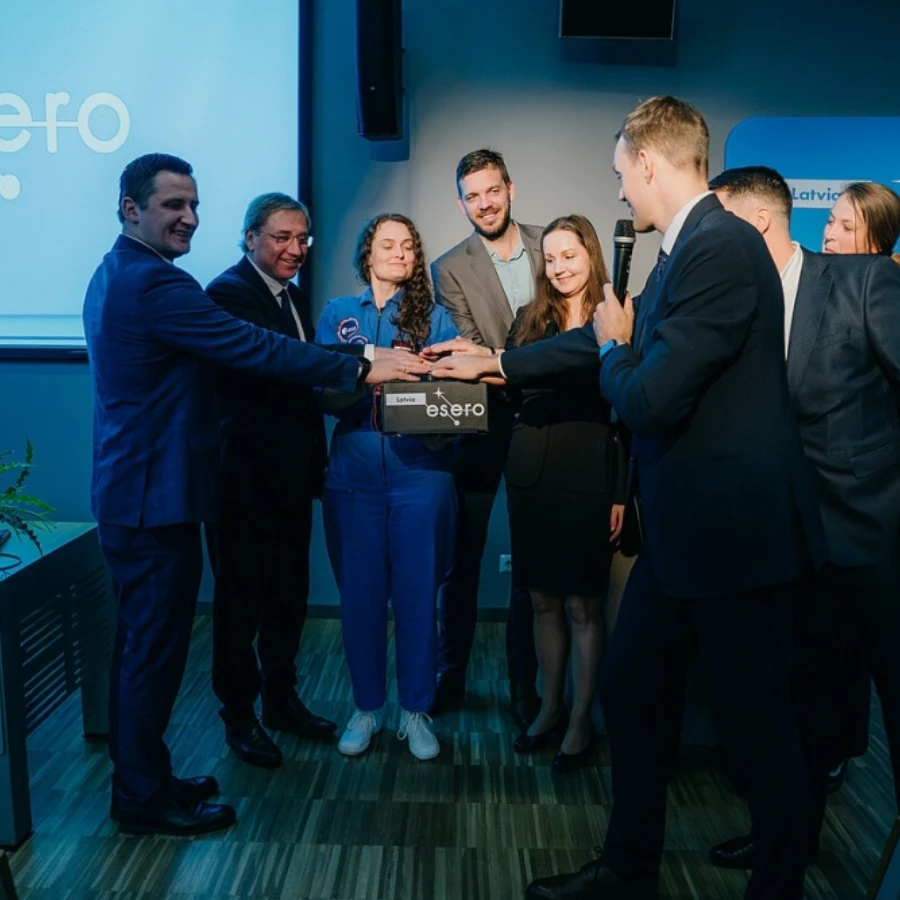
The Space Exploration Center in Cēsis has joined the European Space Education Network and, together with the University of Latvia and Ventspils University of Applied Sciences, will implement the European Space Education Resource Office (ESERO) initiative in Latvia. The center will promote the availability of European educational resources in Latvia by adapting them to the Latvian language and educational guidelines.
“It is important to emphasize that ESERO is not just a repository of educational materials; it is an opportunity for Latvian students to participate in the European Space Agency's international educational projects, where children can act as future astronauts, engineer-programmers, and researchers. For example, in the CANSED project, young people build and test a satellite the size of a can, or the 'Mission X' project allows them to train like astronauts. There is also the 'Astro Pi' project, which creates programs to run on the International Space Station. Meanwhile, 'Moon Camp' invites designing future habitats on the Moon. These projects will all be adapted for young people in Latvia to actively participate internationally, not to compete, but to enhance their knowledge and experience, and potentially meet like-minded individuals on an international level. Teachers still do not feel strong enough in this regard – Space seems very distant, and few know that it is only a hundred kilometers away,” Annija Abzalone, Head of the Education Program at the Space Exploration Center, told Skonto Media Group.
The main goal of the center will be to provide everyone – educators, parents, and children – with the opportunity to freely use space exploration-based resources to practically explore natural sciences, technology, and solve research tasks, regardless of their place of residence in Latvia.
ESERO Latvia was officially launched on October 21 at the University of Latvia. It is an educational initiative of the European Space Agency (ESA) that promotes interest in natural sciences, technology, engineering, and mathematics (STEM) by using space and current issues in these fields as resources for updating and acquiring knowledge.
The Space Exploration Center is involved in partnership with experience in creating practical activities and explaining space themes to visitors of different ages. Meanwhile, cooperation with universities and the European education network will allow for the use of a wider range of educational resources, exchange experiences, and collaborate with scientists and representatives of the space industry.
Partners jointly plan to offer activities for children and young people from preschool age to high school, as well as their families and educators.