Association: Three to four children are removed from families every day
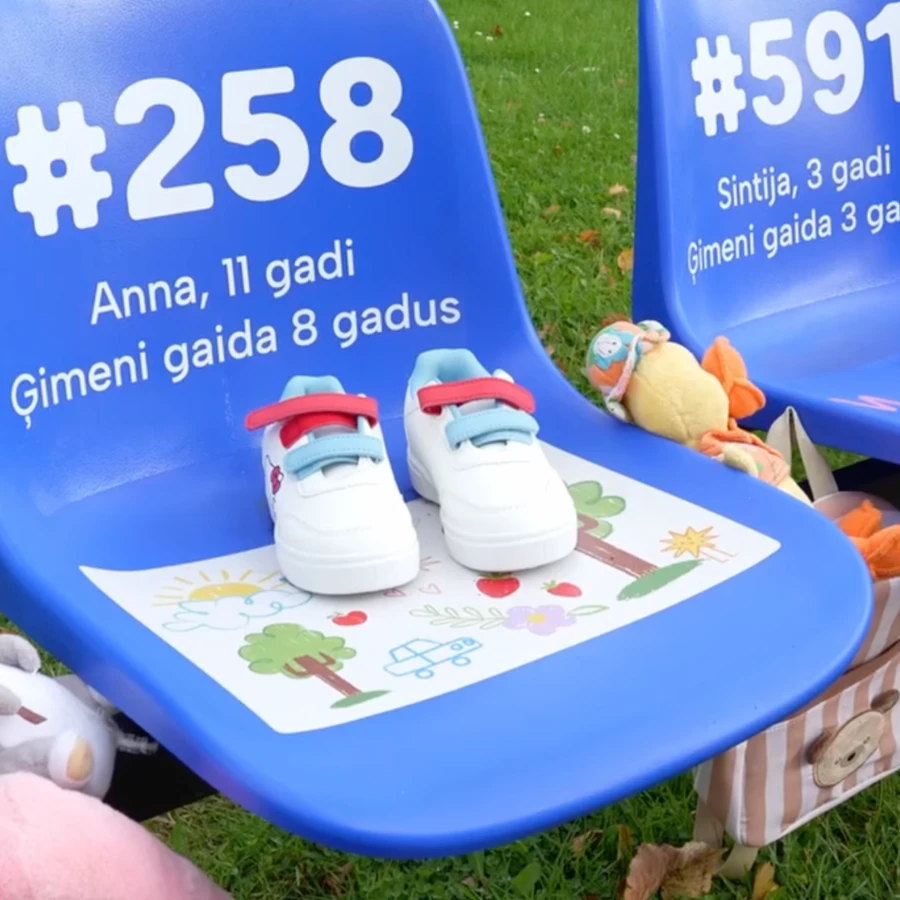
Today in Riga, at Baumanis Square near the Gunārs Astra monument, the final phase of the "In Line for a Family" (Rindā uz ģimeni) campaign organized by the SOS Children's Villages Association of Latvia is being launched. The environmental installation—a row of empty chairs—serves as a reminder of the more than 1,000 children in Latvia who are waiting for the opportunity to grow up in a family environment.
The campaign started in August in Bauska and has also traveled through Iecava, Kuldīga, and Gulbene. As Ilze Paleja, Chairperson of the Board of the SOS Children's Villages Association of Latvia, noted in an interview with Skonto Media Group (SMG), the public response during this time has been strong.
"There is a QR code placed on the chairs where people can take a test to learn more about their capabilities and possibilities to become a foster family or guardian. More than 1,000 people in Latvia have already completed this test. We are now beginning to organize meetings and opportunities to learn more about what it entails and what support is available," says I. Paleja.
Children "in line" pay with their childhood
Explaining the significance of the installation—the row of empty chairs—the head of the association emphasizes that adults are used to standing in line at stores or at the doctor's office, but for children, this line means a lost childhood.
"There are currently around 1,000 children in crisis centers and care institutions, and every month or year costs them their childhood. The statistics are very alarming—in Latvia, more than 1,000 children are removed from their families every year. That is roughly three to four children every day. The number of foster families is declining, while the number of children who need family care is growing," stresses I. Paleja, calling on people to open their home doors and hearts.
The campaign in Riga will last several weeks
Although this is the final stage of the campaign, the installation and information activities will remain available in Riga for several more weeks. The association will be able to provide the first aggregated results in November regarding how many people decided to become foster families following the campaign.
Currently, 654 families in Latvia hold active foster family status, but the need for new foster families remains acute.